Learning Center
Cow Dung to Biogas Calculator: Estimate Gas, Bio-CNG, Electricity and ROI in 2026
By GrowDiesel · June 8, 2026
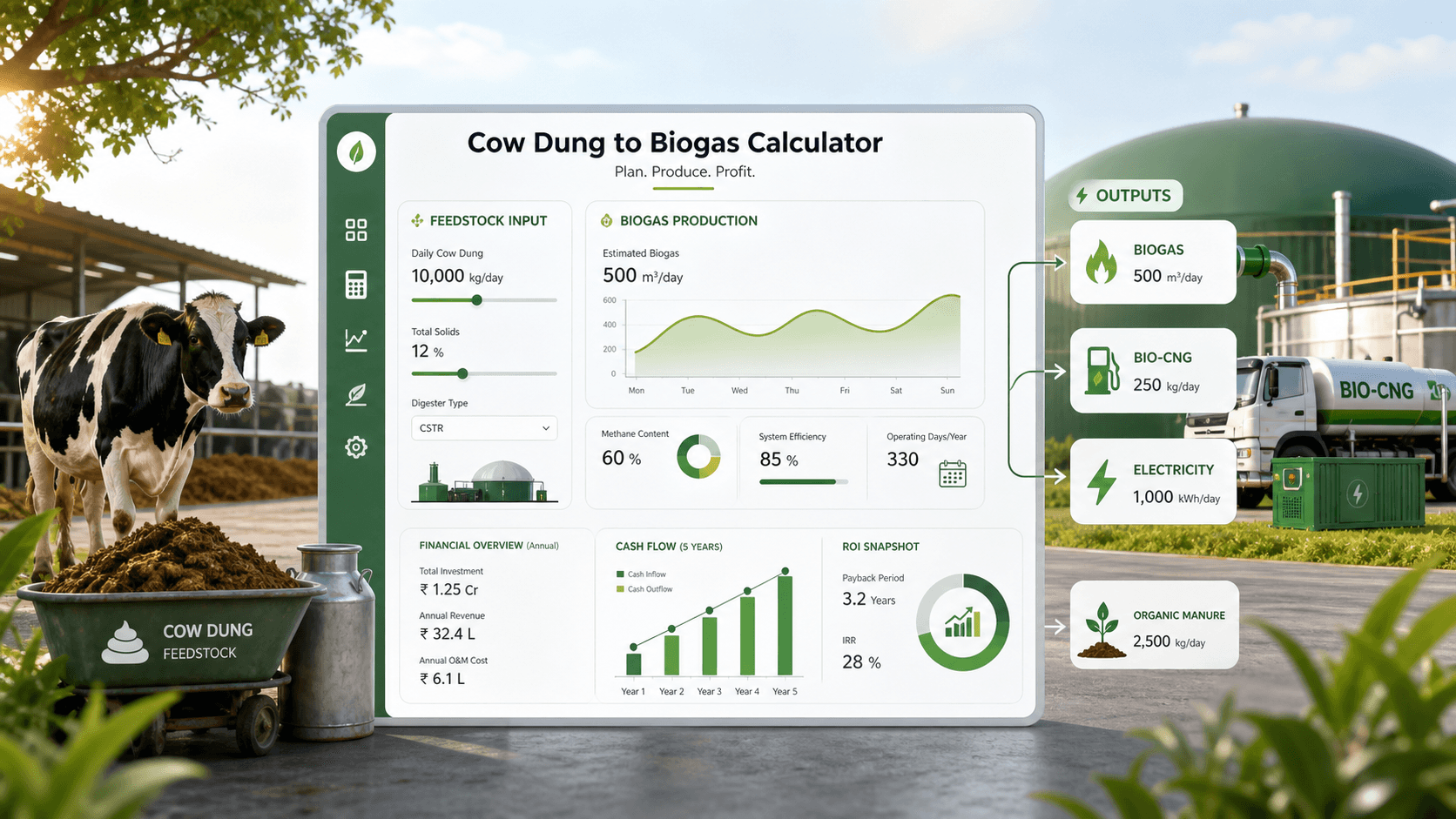
Cow dung is one of the most searched and most misunderstood biogas feedstocks. It is stable, widely available, and process-friendly, but it is not a magic high-yield substrate on its own. A useful cow dung to biogas calculator should answer four questions quickly: how much fresh dung is available per day, what gas yield band is realistic, whether Bio-CNG or electricity is the better route, and what revenue or payback looks like after opex.
Start with tonnes per day, not plant size
Most weak feasibility studies start by picking a plant size and forcing feedstock into it. For cow dung projects, start the other way around. Count daily fresh dung, collection reliability, water addition, transport distance, and seasonal variation before deciding digester volume or upgrading capacity.
A dairy farm, gaushala, cattle cluster, or village aggregation model can all use the same logic: daily fresh dung drives raw biogas, methane volume, digestate output, and the size of any Bio-CNG, CHP, or boiler pathway.
Bioflux is useful because the model keeps feedstock assumptions, gas conversion, revenue, and reporting separate. That makes it easier to test a conservative base case before adding co-feedstocks such as food waste, press mud, poultry litter, or crop residue.
Compare cow dung with other feedstocks · Calculate gas, Bio-CNG and electricity output
What yield should a cow dung calculator use?
Cow dung yield depends on moisture, volatile solids, digestion temperature, retention time, dilution, collection quality and whether urine or bedding material is mixed in. That is why a serious calculator should use a range rather than one fixed number.
For early planning, many project teams model fresh cow dung in conservative, base and optimized bands. The goal is not to promise a universal yield. The goal is to see whether the project still works when gas output is lower than expected, and how much upside appears if collection and process control improve.
The important commercial lesson is simple: cow dung is dependable but often lower-energy than food waste or other rich substrates. If ROI is thin, co-digestion can be more powerful than simply increasing digester size.
| Planning case | When to use it | What it protects against |
|---|---|---|
| Conservative | Early feasibility, loose collection, variable moisture | Overstating gas output and payback |
| Base | Known daily dung supply and normal digester control | Reasonable plant sizing and revenue forecasts |
| Optimized | Reliable collection, good mixing, stable retention time | Testing upside before adding richer feedstock |
Convert cow dung biogas into Bio-CNG, kWh or heat
Raw biogas is only the first output. A commercial model should convert that gas into the route that makes sense locally: direct heat, electricity through a generator or CHP system, or upgraded Bio-CNG/biomethane.
Electricity can work where the site has strong captive demand and a realistic power tariff. Bio-CNG can work where upgrading, compression, gas quality, logistics and offtake are strong enough to justify the extra equipment. Heat can matter for dairies, process plants, kitchens and drying operations.
Do not compare only gross energy. Upgrading losses, compressor power, generator efficiency, downtime, maintenance and digestate handling all decide whether the cow dung project becomes a useful asset or a spreadsheet fantasy.
Read: biogas to electricity calculator · Read: biogas to Bio-CNG conversion cost
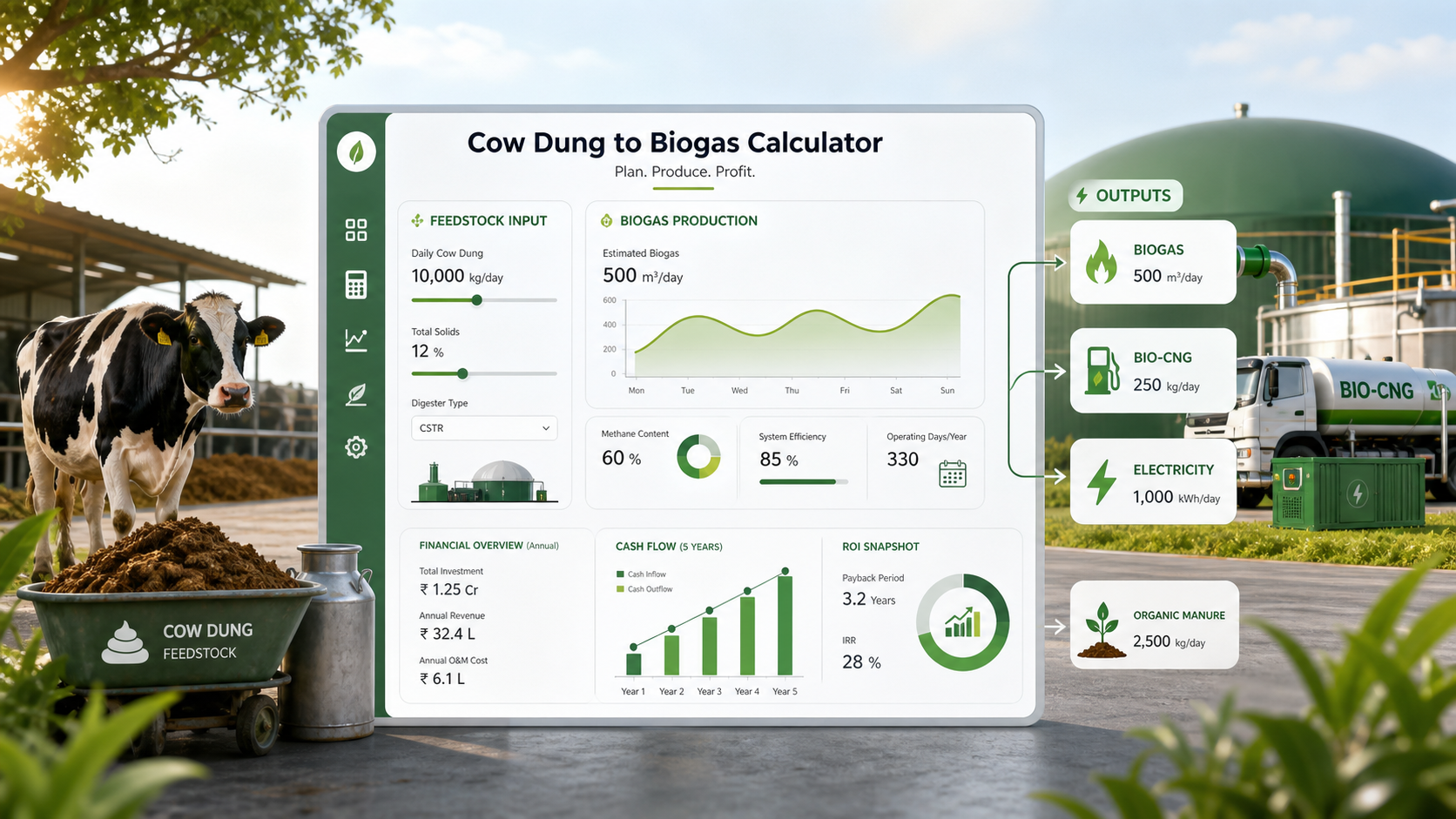
The ROI model: revenue is more than gas
Cow dung projects often carry multiple value streams. Gas sales or electricity savings are the obvious line items, but FOM, digestate value, avoided waste handling, odor control, ESG reporting and carbon impact can all influence the decision.
The challenge is that these values do not arrive with equal certainty. Gas offtake may be contractual, electricity savings may depend on internal consumption, and FOM value may depend on local distribution. A strong calculator lets you separate reliable revenue from optional upside.
Use sensitivity cases for CBG price, power tariff, feedstock logistics, moisture, downtime, capex, opex and digestate monetization. If the project only works in the optimistic case, it is not ready for bankable planning.
Stress-test cow dung biogas revenue and payback · Read: calculate biogas plant ROI
When cow dung needs co-digestion
Cow dung is a strong anchor feedstock because it supports process stability and predictable collection in dairy regions. But commercial CBG projects often need more methane density than dung alone can provide.
Co-digestion with food waste, press mud, poultry litter, crop residue or other organics can raise gas output, but it also adds contamination, nitrogen, logistics and process-risk questions. The right mix depends on local availability and the operator's ability to control quality.
That is where a calculator workflow becomes valuable: model cow dung alone first, then add co-feedstocks one at a time and watch gas output, opex, retention time, Bio-CNG yield and payback change.
Read: food waste vs cow dung biogas yield · Read: press mud vs agricultural residue for CBG
Cow dung is a dependable foundation for biogas planning, but the best projects model the full chain: collection, yield, methane, energy route, revenue, digestate and payback. Use Bioflux to test the conservative case first, then see whether Bio-CNG, electricity or co-digestion creates the stronger project.
Frequently asked questions
How do I calculate biogas from cow dung?
Start with daily fresh cow dung availability, choose a conservative/base/optimized yield band, estimate raw biogas and methane content, then convert that gas into Bio-CNG, electricity, heat or revenue using local efficiency and price assumptions.
Is cow dung enough for a commercial CBG plant?
Cow dung can anchor a CBG project when daily collection is reliable, but many commercial projects improve yield and ROI through co-digestion with richer feedstocks. The decision depends on tonnage, methane yield, logistics, capex, opex and offtake.
What should a cow dung to biogas calculator include?
It should include fresh dung per day, moisture and solids assumptions, biogas and methane yield, Bio-CNG or kWh conversion, capex, opex, downtime, FOM or digestate value, revenue and payback sensitivity.
Build your cow dung case in Bioflux: compare feedstock in the feedstock calculator, estimate gas and Bio-CNG in the gas calculator, then test payback in the revenue calculator.
Calculate cow dung biogas output
dairy waste biogas ROI calculator
Also read: Food waste vs cow dung biogas yield
Also read: Biogas to electricity calculator
Also read: Bio-CNG conversion cost and payback
Share: #CowDungBiogas #GobarGas #CBG #BioCNG #DairyWaste #Bioflux