Learning Center
Biogas to Electricity Calculator: Convert m3 of Biogas into kWh, Engine Size, and Revenue
By GrowDiesel · June 2, 2026
Search interest around biogas calculators is getting more specific: developers do not only want gas volume, they want to know how many kilowatt-hours a digester can produce, what CHP generator size is realistic, and whether electricity use beats upgrading to Bio-CNG. The answer depends on methane content, lower heating value, engine efficiency, operating hours, parasitic load, and local tariff. This guide turns those variables into a clean calculation path you can model before committing capex.
The fast conversion: 1 m3 of biogas to kWh
A practical rule for raw biogas is that 1 m3 contains roughly 5.5 to 6.5 kWh of chemical energy when methane is near 55% to 65%. Electricity output is lower because a CHP engine converts only part of that energy into power.
For planning, multiply raw biogas volume by methane-adjusted energy content, then multiply by electrical efficiency. A common early-stage band is 30% to 40% electrical efficiency, which means 1 m3 of typical raw biogas often produces about 1.7 to 2.6 kWh of electricity before parasitic load.
That range is wide on purpose. A low-methane digester, oversized engine, poor uptime, or high internal consumption can erase margin quickly.
| Input assumption | Planning range | Why it matters |
|---|---|---|
| Methane in raw biogas | 55% to 65% | Sets chemical energy available |
| Chemical energy | 5.5 to 6.5 kWh/m3 | First step in m3 to kWh conversion |
| Electrical efficiency | 30% to 40% | Determines saleable power before plant load |
| Net plant load | 5% to 15% | Pumps, agitators, blowers, controls, and auxiliaries |
Daily electricity formula for a biogas plant
Use this structure for a first-pass calculation: daily electricity kWh = raw biogas m3 per day x biogas energy kWh per m3 x engine electrical efficiency x uptime factor x net-of-parasitic-load factor.
Example: 2,000 m3/day of biogas x 6.0 kWh/m3 x 35% engine efficiency x 92% uptime x 90% net factor gives roughly 3,478 kWh/day of usable electricity. At 24 operating hours, that supports an average net electrical output near 145 kW.
The same plant may need a larger installed CHP rating than the average number suggests, because gas production, engine dispatch, and downtime do not stay perfectly flat.
CHP generator sizing: kW is not only kWh divided by 24
Generator sizing should start with gas availability, but it must also respect minimum turndown, peak gas production, planned downtime, maintenance reserves, and whether heat is monetized or wasted.
If your plant produces 3,500 net kWh/day, a simple average is about 146 kW. In practice, developers may evaluate a CHP package around 160 kW to 200 kW depending on hourly gas balancing, storage, and operating strategy.
Oversizing can reduce engine efficiency and increase maintenance cost. Undersizing can force flaring or missed revenue. This is where scenario modeling is much safer than a fixed lookup table.
Model power revenue and payback in the Bioflux revenue calculator
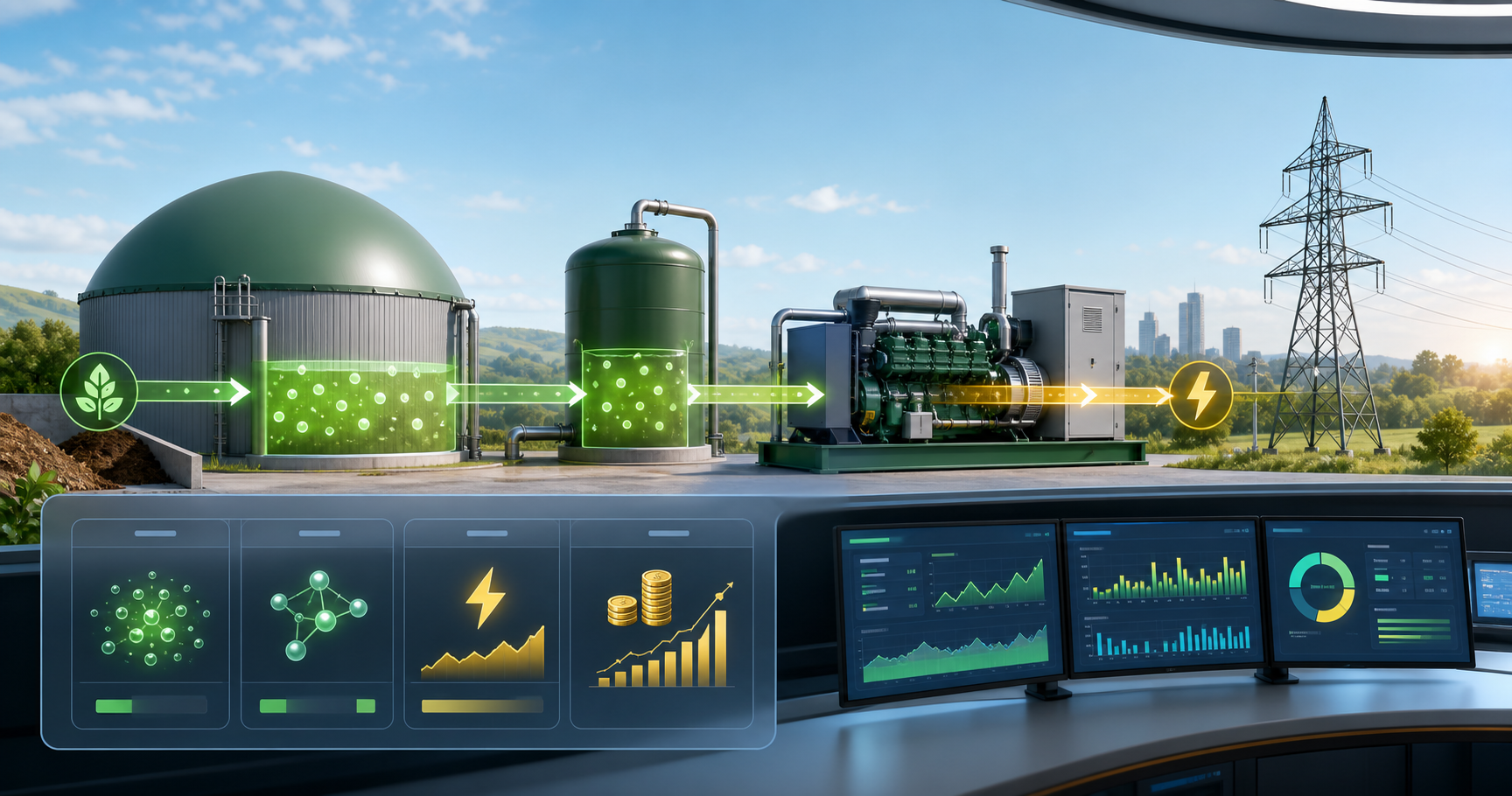
Electricity versus Bio-CNG: which route pays better?
Electricity generation can be attractive where captive power tariffs are high, grid export is reliable, heat recovery has value, or Bio-CNG logistics are weak. Bio-CNG can win where offtake contracts, compression infrastructure, and gas quality compliance support a premium product.
The best route is rarely universal. Compare net electricity revenue after parasitic load and engine opex against Bio-CNG revenue after purification, compression, methane slip, and transport.
For many commercial plants, the decision is not electricity or Bio-CNG forever. It is which pathway gives the strongest return for your feedstock, tariff, location, and financing constraints.
| Decision factor | Electricity / CHP route | Bio-CNG route |
|---|---|---|
| Main revenue unit | kWh | kg or Nm3 biomethane |
| Core capex | CHP engine, grid/captive power systems | Upgradation, compression, cascades |
| Key efficiency risk | Engine efficiency and parasitic load | Methane recovery and compression power |
| Best fit | High captive tariff or useful heat demand | Strong CBG/RNG offtake and logistics |
Inputs every biogas electricity model should include
A serious calculator should ask for feedstock mix, daily feed quantity, methane percentage, expected gas production, CHP efficiency, uptime, internal electricity use, tariff, heat recovery value, engine maintenance, and financing assumptions.
If you only model gross kWh, you overstate project value. Net kWh, avoided diesel or grid purchases, export limits, and seasonal feedstock swings are what determine bankability.
Bioflux lets teams connect gas output, project revenue, and downloadable reporting so the energy calculation does not live separately from the financial model.
Biogas electricity economics are simple only at the headline level. The useful model is net kWh, not gross gas volume: methane content, engine efficiency, uptime, parasitic load, tariff, and heat recovery decide whether the project actually performs.
Frequently asked questions
How many kWh are in 1 m3 of biogas?
Typical raw biogas around 55% to 65% methane contains roughly 5.5 to 6.5 kWh of chemical energy per m3. A CHP engine commonly converts about 1.7 to 2.6 kWh per m3 into electricity before plant parasitic load, depending on methane content and engine efficiency.
How do I calculate daily electricity from biogas?
Multiply raw biogas m3 per day by energy content per m3, engine electrical efficiency, uptime, and a net-of-parasitic-load factor. Then divide net daily kWh by operating hours to estimate average kW output.
Is biogas electricity better than converting to Bio-CNG?
It depends on local power tariff, heat use, grid export rules, Bio-CNG offtake, compression logistics, and methane recovery. Electricity can win for captive power; Bio-CNG can win where premium gas offtake is secure.
Run your feedstock and methane assumptions in the Bioflux gas calculator, then test electricity revenue, payback, and sensitivity in the revenue calculator.
Calculate biogas power revenue in Bioflux
biogas production and methane calculator
biogas electricity revenue calculator
Also read: Biogas to Bio-CNG conversion cost blueprint
Also read: Food waste vs cow dung biogas yield
Also read: Calculate biogas plant ROI in 2026
Share: #Biogas #CHP #RenewableEnergy #BioCNG #BiogasCalculator #Bioflux